
Editorial responsibilities : Direction de la collection "Droit et Économie", L.G.D.J. - Lextenso éditions (30)
🌐follow Marie-Anne Frison-Roche on LinkedIn
🌐subscribe to the Newsletter MAFR. Regulation, Compliance, Law
____
► Full Reference: M.-A. Frison-Roche (ed.), Contentieux Systémique Émergent (Emerging Systemic Litigation), Paris, LGDJ, "Droit & Économie" Serie, to be published
____
📚Consult all the other books of the Serie in which this book is published
____
► General Presentation of the Book :
____
TABLE OF CONTENTS

Thesaurus : Doctrine

► Référence complète : P.-Y. Gautier, « Contre le droit illimité à la preuve devant les autorités administratives indépendantes », Mélanges en l'honneur du Professeur Claude Lucas de Leyssac, LexisNexis, 2018, p.181-193.
____
📘 Lire une présentation générale de l'ouvrage dans lequel l'article est publié

Publications
🌐suivre Marie-Anne Frison-Roche sur LinkedIn
🌐s'abonner à la Newsletter MAFR Regulation, Compliance, Law
____
 ► Référence complète : M.-A. Frison-Roche, Choix et embranchements de compétences lorsqu'un enjeu de vigilance est allégué, document de travail, novembre 2024.
____
🧮Ce document de travail a été élaboré pour constituer la base d'une intervention à la conférence Le droit processuel de la vigilance, du 18 novembre 2024
qui fait partie du cycle de conférences sur Le contentieux systémique,
____
📕Ce document de travail sera aussi la base d'une contribution pour l'ouvrage publié en 2025.
____
► Résumé du document de travail :
____
🔓lire le document de travail ci-dessous⤵️
June 25, 2026
Publications

🌐 follow Marie-Anne Frison-Roche on LinkedIn
🌐subscribe to the Newsletter MAFR Regulation, Compliance, Law
🌐subscribe to the Video Newsletter MAFR Surplomb
🌐subscribe to the Newsletter MaFR Droit & Art
____
► Full Reference: M.A. Frison-Roche, "La part du gracieux dans le traitement juridictionnel de la compliance (The role of Discretionary Jurisdictio in the judicial treatment of Compliance cases)", in Mélanges Dominique d'Ambra, Liber Amicorum, Lefebvre-Dalloz, 2026, pp.175-196.
____
📝read this article (in French)
____
🚧read the bilingual Working Paper, base of this article
____
► English summary of this article: Based on the definition of Judicial Office, the procedural principles that derive from it and the consequent powers that judges exercise, the objet of this study is to measure the degree of discretion that exists in the judicial treatment of compliance, without direct consideration for the dispute between litigants. This part is very ignored, when it should be given top priority. Indeed, because Systems are involved in compliance cases brought before civil or commercial judges, we are seeing a development of this discretionary element in judicial fonction. Discretionary matters differ from unilateral discretionary procedures, and this discretionary element relates to what the judge examines, possibly in the context of a dispute.
The first part of this contribution therefore aims to describe the natural development of the discretionary power of the judge to deal with compliance cases brought before them. This role stems from the fact that, even when triggered by a dispute, what is submitted to the judge is a situation composed of a system, which cannot defend its interests before the civil or commercial judge in this Systemic Litigation arising from the very nature of Compliance Law and the Compliance Obligations it engenders on systemic entites. Moreover, it is the Future whose interests must be considered and protected, which the judge must do directly.
This leads to the second part of the contribution, calling for a rethinking of the procedure and the role of the Compliance Judge, so that ex gratia matters can be dealt with. The judge must therefore verify that there are no conflicts of interest between the litigants, including hidden ones, and must learn about the systems involved. The inquisitorial principle must therefore be strengthened. But at the same time, since the primary aim is not to settle a dispute but to resolve a systemic problematic situation, the judge must facilitate the movements of the parties, and the adversarial principle must also be strengthened. Must be encouraged this activation of a powerful and discretionary approach, not as an exception but as a principle fully articulated with a contentious principle, with the dispute being only a means used by the necessary parties to enable systemic compliance situations to be resolved.
________
May 29, 2026
Editorial responsibilities : Direction of the collection Compliance & Regulation, JoRC and Bruylant
🌐Follow Marie-Anne Frison-Roche on LinkedIn
🌐Subscribe to the Newsletter MAFR Regulation, Compliance, Law
🌐Subscribe to the video newsletter MAFR Overhang
🌐Subscribe to the Newsletter MaFR Law & Art
____
► Full Reference: M.-A. Frison-Roche (ed.), Compliance Obligation, Journal of Regulation & Compliance (JoRC) and Bruylant, "Compliance & Regulation" Serie, 2026, to be published
____
📕In parallel, a book in French L'Obligation de compliance, is published in the collection "Régulations & Compliance" co-published by the Journal of Regulation & Compliance (JoRC) and Lefebvre-Dalloz.
____
📚This book is inserted in this series created by Marie-Anne Frison-Roche for developing Compliance Law.
read the presentations of the other books of this Compliance Series:
- further books:
🕴️M.A. Frison-Roche (ed.), 📘Compliance Evidential System, 2027
🕴️M.A. Frison-Roche (ed.), 📘Compliance and Contract, 2027
- previous books:
🕴️M.A. Frison-Roche (ed), 📘Compliance Juridictionnalisation, 2023
🕴️M.A. Frison-Roche (ed), 📘Compliance Monumental Goals, 2022
🕴️M.-A. Frison-Roche (ed.), 📘Compliance Tools, 2021
____
► go to the general presentation of this 📚Series Compliance & Regulation, conceived, founded et managed by Marie-Anne Frison-Roche, co-published par the Journal of Regulation & Compliance (JoRC) and Bruylant.
____
🧮the book follows the cycle of colloquia organised by the Journal of Regulation & Compliance (JoRC) and its Universities partners.
____
► general presentation of the book: Compliance is sometimes presented as something that cannot be avoided, which is tantamount to seeing it as the legal obligation par excellence, Criminal Law being its most appropriate mode of expression. However, this is not so evident. Moreover, it is becoming difficult to find a unity to the set of compliance tools, encompassing what refers to a moral representation of the world, or even to the cultures specific to each company, Compliance Law only having to produce incentives or translate this ethical movement. The obligation of compliance is therefore difficult to define.
This difficulty to define affecting the obligation of compliance reflects the uncertainty that still affects Compliance Law in which this obligation develops. Indeed, if we were to limit this branch of law to the obligation to "be conform" with the applicable regulations, the obligation would then be located more in these "regulations", the classical branches of Law which are Contract Law and Tort Law organising "Obligations" paradoxically remaining distant from it. In practice, however, it is on the one hand Liability actions that give life to legal requirements, while companies make themselves responsible through commitments, often unilateral, while contracts multiply, the articulation between legal requirements and corporate and contractual organisations ultimately creating a new way of "governing" not only companies but also what is external to them, so that the Monumental Goals, that Compliance Law substantially aims at, are achieved.
The various Compliance Tools illustrate this spectrum of the Compliance Obligation which varies in its intensity and takes many forms, either as an extension of the classic legal instruments, as in the field of information, or in a more novel way through specific instruments, such as whistleblowing or vigilance. The contract, in that it is by nature an Ex-Ante instrument and not very constrained by borders, can then appear as a natural instrument in the compliance system, as is the Judge who is the guarantor of the proper execution of Contract and Tort laws. The relationship between companies, stakeholders and political authorities is thus renewed.
____
🏗️general construction of the book
The book opens with a substantial Introduction, putting the different sort of obligations of compliance in legal categories for showing that companies must build structures of compliance (obligation of result) and act to contribute with states and stakeholders to reach Monumental Goals (obligation of means).
The first part is devoted to the definition of the Compliance Obligation.
The second part presents the articulation of Compliance obligation with the other branchs of Law, because the specific obligation is built by Compliance Law, as new substantial branch of Law but also by many other branchs of Law.
The third part develops the pratical means established to obtained the Compliance Obligation to be effective, efficace and efficient.
The fourth part takes the Obligation of Vigilance as an illustration of all these considerations and the discussion about the future of this sparehead fo the Compliance Obligation .
The fifth part refers to the place and the role of the judges, natural characters for any obligation.
____
TABLE OF CONTENTS
ANCHORING THE SO DIVERSE COMPLIANCE OBLIGATIONS IN THEIR NATURE, REGIMES AND FORCE TO BRING OUT THE VERY UNITY OF THE COMPLIANCE OBLIGATION, MAKING IT COMPREHENSIBLE AND PRACTICABLE
🔹 Compliance Obligation: building a compliance structure that produces credible results withe regard to the Monumentals Goals targeted by the Legislator, by 🕴️Marie-Anne Frison-Roche
TITLE I.
IDENTIFYING THE COMPLIANCE OBLIGATION
CHAPTER I: NATURE OF THE COMPLIANCE OBLIGATION
Section 1 🔹 Will, Heart and Calculation, the three marks surrounding the Compliance Obligation, by 🕴️Marie-Anne Frison-Roche
Section 2 🔹 Debt, as the basis of the compliance obligation, by 🕴️Bruno Deffains
Section 3 🔹 Compliance Obligation and Human Rights, by 🕴️Jean-Baptiste Racine
Section 4 🔹 Compliance Obligation and changes in Sovereignty and Citizenship, by 🕴️René Sève
Section 5 🔹 The definition of the Compliance Obligation in Cybersecurity, by 🕴️Michel Séjean
CHAPTER II: SPACES OF THE COMPLIANCE OBLIGATION
Section 1 🔹 Industrial Entities and Compliance Obligation, by 🕴️Etienne Maclouf
Section 2 🔹 Compliance, Value Chains and Service Economy, by 🕴️Lucien Rapp
Section 3 🔹 Compliance and conflict of laws. International Law of Vigilance-Conformity, based on applications in Europe, by 🕴️Louis d'Avout
TITLE II.
ARTICULATING THE COMPLIANCE OBLIGATION WITH OTHER BRANCHES OF LAW
Section 1 🔹 Tax Law and Compliance Obligation, by 🕴️Daniel Gutmann
Section 2 🔹 General Procedural Law, prototype of the Compliance Obligation, by 🕴️Marie-Anne Frison-Roche
Section 3 🔹 Corporate and Financial Markets Law facing the Compliance Obligation, by 🕴️Anne-Valérie Le Fur
Section 4 🔹 Transformation of Governance and Vigilance Obligation, by 🕴️Véronique Magnier
Section 5 🔹 The Relation between Tort Law and Compliance Obligation, by 🕴️Jean-Sébastien Borghetti
Section 6 🔹 Environmental and Climate Compliance, by 🕴️Marta Torre-Schaub
Section 7 🔹 Competition Law and Compliance Law, by 🕴️Jean-Christophe Roda
Section 8 🔹 The Compliance Obligation in Global Law, by 🕴️Benoît Frydman & 🕴️Alice Briegleb
Section 9 🔹 Environmental an Climatic Dimensions of the Compliance Obligation, by 🕴️Marta Torre-Schaub
Section 10 🔹 Judge of Insolvency Law and Compliance Obligations, by 🕴️Jean-Baptiste Barbièri
TITLE III.
COMPLIANCE: GIVE AND TAKE THE MEANS TO OBLIGE
CHAPTER I: COMPLIANCE OBLIGATION: THE CONVERGENCE OF SOURCES
Section 1 🔹 Compliance Obligation upon Obligation works, by 🕴️Marie-Anne Frison-Roche
Section 2 🔹 Conformity technologies to meet Compliance Law requirements. Some examples in Digital Law, by 🕴️Emmanuel Netter
Section 3 🔹 Legal Constraint and Company Strategies in Compliance matters, by 🕴️Jean-Philippe Denis & 🕴️Nathalie Fabbe-Coste
Section 4 🔹 Opposition and convergence of American and European legal systems in Compliance Rules and Systems, by 🕴️Raphaël Gauvain & 🕴️Blanche Balian
Section 5 🔹 In Compliance Law, the legal consequences for Entreprises of their Commitments and Undertakings, by 🕴️Marie-Anne Frison-Roche
CHAPTER II: INTERNATIONAL ARBITRATION IN SUPPORT OF THE COMPLIANCE OBLIGATION
Section 1 🔹 How International Arbitration can reinforce the Compliance Obligation, by 🕴️Laurent Aynès
Section 2 🔹 Arbitration consideration of Compliance Obligation for a Sustainable Arbitration Place, by 🕴️Marie-Anne Frison-Roche
Section 3 🔹 The Arbitral Tribunal's Award in Kind, in support of the Compliance Obligation, by 🕴️Eduardo Silva Romero
Section 4 🔹 The use of International Arbitration to reinforce the Compliance Obligation: the example of the construction sector, by 🕴️Christophe Lapp
Section 5 🔹 The Arbitrator, Judge, Supervisor, Support, by 🕴️Jean-Baptiste Racine
TITLE IV.
VIGILANCE, SPEARHEAD OF THE COMPLIANCE OBLIGATION
Section 1 🔹 Vigilance Obligation, Spearheard and Total Share of the Compliance Obligation, by 🕴️Marie-Anne Frison-Roche
CHAPTER I: INTENSITIES OF THE VIGILANCE OBLIGATION, SPEARHEAD OF THE COMPLIANCE SYSTEM
Section 2 🔹 Intensity of the Vigilance Obligation by Sectors: the case of Financial Operators, by 🕴️Anne-Claire Rouaud
Section 3 🔹 Intensity of the Vigilance Obligation by Sectors: the case of Digital Operators, by 🕴️Grégoire Loiseau
Section 4 🔹 Intensity of the Vigilance Obligation by Sectors: the case of Energy Operators, by 🕴️Marie Lamoureux
CHAPTER II: GENERAL EVOLUTION OF THE VIGILANCE OBLIGATION
Section 1 🔹 Rethinking the Concept of Civil Liability in the light of the Duty of Vigilance, Spearhead of Compliance, by 🕴️Mustapha Mekki
Section 2 🔹 Contracts and clauses, implementation and modalities of the Vigilance Obligation, by 🕴️Gilles J. Martin
Section 3 🔹 Proof that Vigilance has been properly carried out with regard to the Compliance Evidence System, by 🕴️Jean-Christophe Roda
Section 4 🔹 Compliance, Vigilance and Civil Liability: put in order and keep the Reason, by 🕴️Marie-Anne Frison-Roche
Title V.
THE JUDGE AND THE COMPLIANCE OBLIGATION
Section 1 🔹 Present and Future Challenges of Articulating Principles of Civil and Commercial Procedure with the Logic of Compliance, by 🕴️Thibault Goujon-Bethan
Section 2 🔹 The Judge required for an Effective Compliance Obligation, by 🕴️Marie-Anne Frison-Roche
________
CONCLUSION
THE COMPLIANCE OBLIGATION: A BURDEN BORNE BY SYSTEMIC COMPANIES GIVING LIFE TO COMPLIANCE LAW
(conclusion and key points of the books, free access)

March 3, 2026
Thesaurus
► Référence complète : P. Lingibé, "Confidentialité des juristes d’entreprise : le Conseil constitutionnel consacre-t-il une révolution… ou un équilibre précaire ?", Actu-Juridique, 3 février 2026
____

Oct. 2, 2025
Publications
🌐follow Marie-Anne Frison-Roche on LinkedIn
🌐subscribe to the Newsletter MAFR Regulation, Compliance, Law
🌐subscribe to the Video Newsletter MAFR Surplomb
____
► Full Reference: M.-A. Frison-Roche, "Le droit processuel, prototype de l'Obligation de Compliance " ("General Procedural Law, prototype of Compliance Obligation"), in M.-A. Frison-Roche (ed.), L'Obligation de Compliance, Journal of Regulation & Compliance (JoRC) and Dalloz, coll. "Régulations & Compliance" 2025, pp. 209-233.
____
📝read the article (in French)
____
____
📕read a general presentation of the book, L'Obligation de Compliance, in which this article is published
____
► English summary of this contribution : At first glance, General Procedural Law seems to be the area the least concerned by the Compliance Obligation, because if the person is obliged by it, mainly large companies, it is precisely, thanks to this Ex Ante, in order to never to have to deal with proceedings, these path that leads to the Judge, that Ex Post figure that in return for the weight of the compliance obligation they have been promised they will never see: any prospect of proceedings would be seeming to signify the very failure of the Compliance Obligation (I).
But not only are the legal rules attached to the Procedure necessary because the Judge is involved, and increasingly so, in compliance mechanisms, but they are also rules of General Procedural Law and not a juxtaposition of civil procedure, criminal procedure, administrative procedure, etc., because the Compliance Obligation itself is not confined either to civil procedure or to criminal procedure, to administrative procedure, etc., which in practice gives primacy to what brings them all together: General Procedural Law (II).
In addition to what might be called the "negative" presence of General Procedural Law, there is also a positive reason, because General Procedural Law is the prototype for "Systemic Compliance Litigation", and in particular for the most advanced aspect of this, namely the duty of vigilance (III). In particular, it governs the actions that can be brought before the Courts (IV), and the principles around which proceedings are conducted, with an increased opposition between the adversarial principle, which marries the Compliance Obligation, since both reflect the principle of Information, and the rights of the defence, which do not necessarily serve them, a clash that will pose a procedural difficulty in principle (V).
Finally, and this "prototype" status is even more justified, because Compliance Law has given companies jurisdiction over the way in which they implement their legal Compliance Obligations, it is by respecting and relying on the principles of General Procedural Law that this must be done, in particular through not only sanctions but also internal investigations (VI).
________
Oct. 2, 2025
Thesaurus : Doctrine
► Full reference : Th. Goujon-Bethan, "Les enjeux présents à venir de l’articulation des principes de procédure civile et commerciale avec la logique de compliance (Current and future challenges for articulating civil and commercial procedural principles with Compliance Logic)", in M.-A. Frison-Roche (ed.), L'Obligation de Compliance, Journal of Regulation & Compliance (JoRC) and Dalloz, coll. "Régulations & Compliance", 2025, pp.693-719.
____
📕Read a general presentation of the book, L'Obligation de Compliance, in which this article is published.
____
► Summary of this article (by the Journal of Regulation & Compliance - JoRC): The author shows that the French Code of Civil Procedure, because it is exceptionally well designed and managed, can respond to the scale of transformation brought about by Compliance Law.
Compliance Law is normatively anchored in its Monumental Goals: these are brought as such before the judge in 'Systemic Cases'.
However, the French Code of Civil Procedure distinguishes between litigation and conflict, as demonstrated by the work of the academic authors of the Code, who were very famous legal scholars. Indeed, in a "Systemic Case" such as Compliance Law, which necessarily takes precedence (climate, protection of internet users, effective equality of human beings, sustainability of banking systems, etc.), it is the parties who are in dispute, while the conflict encompasses the systems themselves and other entities.
The procedure must incorporate not only the dispute but also the conflict. This means, in particular, that we must deal not only with the dispute, but also with the conflict, which does not necessarily end with the dispute and does not find the same solutions as those sought by the dispute. It is particularly in this latter perspective, essentially in a "Systemic Compliance Case" procedure, that the techniques of mediation, amicus curiae, with a judge who takes an ex ante position, etc., are required. They are available through legal dispositions of this French Code of Civil Procedure: judges who understand what "Systemic Compliance Cases" are need only apply them.
____
🦉this article is available in full text for people who follow the professor Marie-Anne Frison-Roche's teaching
________
Aug. 20, 2025
Editorial responsibilities : Direction of the collection "Cours-Série Droit privé", Editions Dalloz (33)
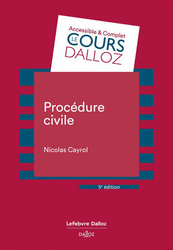
►Référence complète : N. Cayrol, Procédure civile, 5ème éd., Coll. "Cours Dalloz-Série Droit privé", Dalloz, 2025, 569 p.
____
►Présentation de l'ouvrage : L'étude de la procédure civile est indispensable à tous les étudiants désireux d'embrasser une « carrière judiciaire » : magistrat, avocat, huissier, etc. Par nombre d'aspects, la procédure civile est bien, en effet, un droit professionnel, un droit à l'usage des professionnels du procès. La matière figure d'ailleurs aux épreuves des concours et examens d'accès à ces professions.
Mais la procédure civile n'est pas seulement un droit professionnel : elle traite de problèmes qui intéressent tous les juristes, quels qu'ils soient, qu'ils pratiquent ou non la procédure. La connaissance des notions procédurales de base est nécessaire pour la bonne compréhension de nombreuses questions de droit.
___
📚Voir l'ensemble des ouvrages de la même collection "Cours Dalloz -Série Droit privé", créée et dirigée par Marie-Anne Frison-Roche,
et notamment ceux qui traitent des branches du Droit interférant avec la Procédure civile :
📕 Procédures civiles d'exécution
📕 Institutions juridictionnelles
_______
Aug. 15, 2025
Publications

🌐Follow Marie-Anne Frison-Roche on LinkedIn
🌐Subscribe to the Newsletter MAFR Regulation, Compliance, Law
🌐Subscribe to the video newsletter MAFR Overhang
____
► Full reference : M.-A. Frison-Roche, The role of Discretionary Jurisdictio in the judicial treatment of Compliance cases, working paper, August 2025.
____
📗This working document was prepared as a contribution to the collective book offered to Professor Dominique d'Ambra, published in June 2026.
____
► Summary of the working document : Based on the definition of Judicial Office, the procedural principles that derive from it and the consequent powers that judges exercise, the objet of this study is to measure the degree of discretion that exists in the judicial treatment of compliance, without direct consideration for the dispute between litigants. This part is very ignored, when it should be given top priority. Indeed, because Systems are involved in compliance cases brought before civil or commercial judges, we are seeing a development of this discretionary element in judicial fonction. Discretionary matters differ from unilateral discretionary procedures, and this discretionary element relates to what the judge examines, possibly in the context of a dispute.
The first part of this contribution therefore aims to describe the natural development of the discretionary power of the judge to deal with compliance cases brought before them. This role stems from the fact that, even when triggered by a dispute, what is submitted to the judge is a situation composed of a system, which cannot defend its interests before the civil or commercial judge in this Systemic Litigation arising from the very nature of Compliance Law and the Compliance Obligations it engenders on systemic entites. Moreover, it is the Future whose interests must be considered and protected, which the judge must do directly.
This leads to the second part of the contribution, calling for a rethinking of the procedure and the role of the Compliance Judge, so that ex gratia matters can be dealt with. The judge must therefore verify that there are no conflicts of interest between the litigants, including hidden ones, and must learn about the systems involved. The inquisitorial principle must therefore be strengthened. But at the same time, since the primary aim is not to settle a dispute but to resolve a systemic problematic situation, the judge must facilitate the movements of the parties, and the adversarial principle must also be strengthened. Must be encouraged this activation of a powerful and discretionary approach, not as an exception but as a principle fully articulated with a contentious principle, with the dispute being only a means used by the necessary parties to enable systemic compliance situations to be resolved.
________
March 19, 2025
Interviews

🌐suivre Marie-Anne Frison-Roche sur LinkedIn
🌐s'abonner à la Newsletter MAFR Regulation, Compliance, Law
🌐s'abonner à la Newsletter en vidéo MAFR Surplomb
____
► Référence complète : M.-A. Frison-Roche, «Les juristes ont le pouvoir et le devoir de dire Non à Trump » », interview réalisée par Olivia Dufour pour Actu-juridique, Lextenso, 19 février 2025
___
► lire l'entretien : 💬 Lire l'interview
🌐lire la présentation de l'entretien sur LinkedIn
____
► présentation de l'entretien par Actu-Juridique : La tension monte entre Donald Trump et la justice américaine. Alors que le président a demandé la destitution d’un juge qui avait prononcé la suspension d’une expulsion de migrants, le président de la Cour Suprême a rappelé mardi dans un communiqué qu’il existait une procédure d’appel quand on n’était pas satisfait d’une décision de justice. Donald Trump s’en prend aussi aux avocats. Face à cet exécutif apparemment tout-puissant, les juristes ont-ils suffisamment de pouvoir pour faire respecter l’État de droit ? Oui, estime le professeur Marie-Anne Frison-Roche.
____
Q. Depuis son entrée en fonctions, Donald Trump se positionne au-dessus du droit dans un pays qui pourtant accorde à celui-ci un pouvoir déterminant. Les juristes sont-ils en capacité de résister ?
Résumé de la réponse de MAFR : El
Q. De quels outils disposent-ils ?
Résumé de la réponse MAFR : l'
Q. Les juges peuvent bien invalider les décisions de l'exécutif, c'est celui-ci qui finalement les exécute. Ou pas. N'est-ce pas une limite insurmontable au contrepouvoir des juges ?
Résumé de la réponse MAFR : Le
.
_________
Updated: Feb. 11, 2025 (Initial publication: May 20, 2023)
Publications

.🌐follow Marie-Anne Frison-Roche on LinkedIn
🌐subscribe to the Newsletter MAFR Regulation, Compliance, Law
____
► Full Reference: M.-A. Frison-Roche, General Procedural Law, prototype of Compliance Obligation, Working Paper, June 2023 (updated in February 2025).
____
🎤 This working paper was drawn up as a basis for the presentation "Droit de la Compliance et Droit processuel" ("Compliance Law and General Procedural Law") at the colloquium on 13 June 2023, , and then completed for publication.
____
📝It is therefore also the basis for the written contribution, "The General Procedural Obligation, prototype of the Compliance Obligation", in the book to be published Compliance Obligation
____
► Working Paper summary: At first glance, General Procedural Law seems to be the area least concerned by the Compliance Obligation, because if the person is obliged by it, mainly large companies, it is precisely, thanks to this Ex Ante, in order to never to have to deal with proceedings, these path that leads to the Judge, that Ex Post figure that in return for the weight of the compliance obligation they have been promised they will never see: any prospect of proceedings would be seeming to signify the very failure of the Compliance Obligation (I).
But not only are the legal rules attached to the Procedure necessary because the Judge is involved, and increasingly so, in compliance mechanisms, but they are also rules of General Procedural Law and not a juxtaposition of civil procedure, criminal procedure, administrative procedure, etc., because the Compliance Obligation itself is not confined either to civil procedure or to criminal procedure, to administrative procedure, etc., which in practice gives primacy to what brings them all together: General Procedural Law (II).
In addition to what might be called the "negative" presence of General Procedural Law, there is also a positive reason, because General Procedural Law is the prototype for "Systemic Compliance Litigation", and in particular for the most advanced aspect of this, namely the duty of vigilance (III). In particular, it governs the actions that can be brought before the Courts (IV), and the principles around which proceedings are conducted, with an increased opposition between the adversarial principle, which marries the Compliance Obligation, since both reflect the principle of Information, and the rights of the defence, which do not necessarily serve them, a clash that will pose a procedural difficulty in principle (V).
Finally, and this "prototype" status is even more justified, because Compliance Law has given companies jurisdiction over the way in which they implement their legal Compliance Obligations, it is by respecting and relying on the principles of General Procedural Law that this must be done, in particular through not only sanctions but also internal investigations (VI).
____
🔓read the developments below⤵️
Jan. 1, 2025
Publications

🌐 suivre Marie-Anne Frison-Roche sur LinkedIn
🌐 s'abonner à la Newsletter MAFR Regulation, Compliance, Law
____
► Référence complète : M.-A. Frison-Roche, "L’Obligation de Compliance : nouvelle Obligation, manifestation d'une nouvelle branche du Droit", in M.A. Frison-Roche (dir.), L'Obligation de Compliance, Journal of Regulation & Compliance (JoRC) et Dalloz, coll. "Régulations & Compliance", à paraître.
____
► Cet article constitue la conclusion de l'ouvrage ; il est en accès libre.
____
📕consulter une présentation générale de l'ouvrage, L'Obligation de Compliance, dans lequel cet article est publié
____
► Résumé de l'article : Cet article est construit en deux parties.
La première partie explique la façon dont cette "Obligation de Compliance", qui est nouvelle, est elle-même la manifestation de cette branche du Droit nouvelle qu'est le Droit de la Compliance.
En appui de cela, l'article reprend dans sa seconde partie, en reprenant la structuration même de l'ouvrage que j'avais conçue chacune des contributions et la résumant et en la resituant dans la démonstration d'ensemble.
Cet article est en accès libre⤵️

Nov. 18, 2024
Conferences

🌐follow Marie-Anne Frison-Roche on LinkedIn
🌐subscribe to the Newsletter MAFR Regulation, Compliance, Law
🌐subscribe to the Newsletter Surplomb, par MAFR
____
► Full Reference: M.-A. Frison-Roche, "Choix et embranchements de compétences lorsqu'un enjeu de vigilance est allégué" ("Choice and Branching of Jurisdiction when a Vigilance issue is Alleged"), in Le Droit processuel de la Vigilance (Vigilance General Procedural Law), in cycle of conference-debates "Contentieux Systémique Émergent" ("Emerging Systemic Litigation"), organised on the initiative of the Cour d'appel de Paris (Paris Cour of Appeal), with the Cour de cassation (French Court of cassation), the Cour d'appel de Versailles (Versailles Court of Appeal), the École nationale de la magistrature - ENM (French National School for the Judiciary) and the École de formation des barreaux du ressort de la Cour d'appel de Paris - EFB (Paris Bar School), under the scientific direction of Marie-Anne Frison-Roche, November 18, 2024, 11h-12h30, Cour d'appel de Paris, Cassin courtroom
____
🕴️An other speaker to this conference is Natalie Fricero, Emeritus Professor at Côte d'Azur University
🧮see the full programme of this event
____
⚙️This event was conceived as part of the "Emerging Systemic Litigation" cycle of conference-debates, organized by the Paris Court of appeal, in conjunction with the French Court of cassation, the Versailles Court of appeal, the French National School for the Judiciary and the Paris Bar School, under the scientific direction of Marie-Anne Frison-Roche.
____
► English Summary of the conference: This speech opens the conference. It therefore logically focuses on the question of "jurisdictional competence". It is divided into successive points which are progressively linked to each other.
The first point consists to insist on this rule : the organisation of the courts and their jurisdiction can never be detached from the substance of the matter in dispute. This explains why the issue of jurisdiction is such a source of passion for as long as the very definition of Vigilance remains so contentious, and why the 2021 legislature's belief that it could put out the fire has only served to exacerbate it.
The second point relates to the first proposed solution, i.e. maintaining the exclusivity of the Paris First Judicial Court, which is acceptable in principle because by specialising judges acquire a "technical competence" but which presents a very damaging "Bibendum risk".
The third point relates to the second solution proposed, namely the reference to the Motulskian notion of the 'basis of demand', which provokes a fork in the road, with the risk of interminable conflicts and divergent interpretations.
The fourth point is the need to find the best solution, i.e. the least bad solution, consisting above all of forming practical alliances, without requiring new texts, for this particular type of litigation which does not come under any branch of Law and which justifies a dialogue between the heads of the courts.
____
🔓read the key points of this speech below ⤵️
________

Nov. 18, 2024
Organization of scientific events
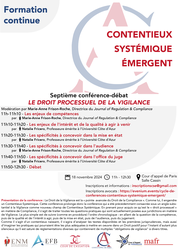
► Full Reference: Le Droit processuel de la Vigilance (Vigilance General Procedural Law), in cycle of conference-debates "Contentieux Systémique Émergent" ("Emerging Systemic Litigation"), organised on the initiative of the Cour d'appel de Paris (Paris Cour of Appeal), with the Cour de cassation (French Court of cassation), the Cour d'appel de Versailles (Versailles Court of Appeal), the École nationale de la magistrature - ENM (French National School for the Judiciary) and the École de formation des barreaux du ressort de la Cour d'appel de Paris - EFB (Paris Bar School), under the scientific direction of Marie-Anne Frison-Roche, November 18, 2024, 11h-12h30, Cour d'appel de Paris, Cassin courtroom
____
► Presentation of the conférence:
____
🧮Programme of this event:
Seventh conference-debate
LE DROIT PROCESSUEL DE LA VIGILANCE
(VIGILANCE GENERAL PROCEDURAL LAW)
Paris Court of Appeal, Cassin courtroom
Presentation and moderation par Marie-Anne Frison-Roche, Professor of Regulatory and Compliance Law, Director ot the Journal of Regulation & Compliance (JoRC)
🕰️11h-11h20. 🎤, by 🕴️Marie-Anne Frison-Roche, Professor of Regulatory and Compliance Law, Director ot the Journal of Regulation & Compliance (JoRC)
🕰️11h20-11h40. 🎤, by 🕴️Natalie Fricero, Emeritus Professor of Law at Côte d'Azur University
🕰️11h40-12h30. Debate
____
🔴Registrations and information requests can be sent to: inscriptionscse@gmail.com
🔴For the attorneys, registrations have to be sent to the following address: https://evenium.events/cycle-de-conferences-contentieux-systemique-emergent/
⚠️The conference-debates are held in person only, in the Cour d’appel de Paris (Paris Court of Appeal).
________

Oct. 29, 2024
MAFR TV : MAFR TV - Overhang

🌐suivre Marie-Anne Frison-Roche sur LinkedIn
🌐s'abonner à la Newsletter MAFR. Regulation, Compliance, Law
🌐s'abonner à la Newsletter Surplomb, par MAFR
____
► Référence complète : M.-A. Frison-Roche, "Droit processuel de la Régulation et de la Compliance", in série de vidéos Surplomb, 29 octobre 2024
____
🌐visionner sur LinkedIn cette vidéo de la série Surplomb
____
____
🎬visionner ci-dessous cette vidéo de la série Surplomb⤵️
____
Surplomp, par mafr
la série de vidéos dédiée à la Régulation, la Compliance et la Vigilance

Oct. 3, 2024
MAFR TV : MAFR TV - Overhang
🌐suivre Marie-Anne Frison-Roche sur LinkedIn
🌐s'abonner à la Newsletter MAFR. Regulation, Compliance, Law
🌐s'abonner à la Newsletter Surplomb, par MAFR
____
► Référence complète : M.-A. Frison-Roche, "Le Contentieux Systémique, notion nouvelle au-delà des branches traditionnelles du Droit", in série de vidéos Surplomb, 3 octobre 2024
____
🌐visionner sur LinkedIn cette vidéo de la série Surplomb
____
____
🎬visionner ci-dessous cette vidéo de la série Surplomb⤵️
____
Surplomp, par mafr
la série de vidéos dédiée à la Régulation, la Compliance et la Vigilance
Sept. 25, 2024
Conferences

🌐follow Marie-Anne Frison-Roche on LinkedIn
🌐subscribe to the Newsletter MAFR Regulation, Compliance, Law
🌐subscribe to the Video Newsletter MAFR Surplomb
____
► Full Reference: M.-A. Frison-Roche, "Devoir de vigilance et litiges commerciaux : Anticiper l'"incidence" et s’organiser" ("Duty of vigilance and Commercial Litigation: Anticipating the "impact" and getting organised"), in L'incidence du devoir de vigilance sur les litiges commerciaux (The Impact of the Duty of Vigilance on Commercial Litigation), Tribunal de commerce de Paris (Paris Commercial Court), Droit & Commerce and Association Française en Faveur de l'Institution Consulaire (AFFIC), Tribunal de commerce de Paris, September 25, 2024, 17.15pm to 20pm
____
🌐read the report of this speech on LinkedIn (in French)
____
🧮see the full programme of this event (in French)
____
🧱consult the scientific coordination sheet of this event
____
🌐consult on LinkedIn a general presentation of this event (in French)
____
► English Summary of the conference: After listening to the enlightening speeches of François Ancel and Jean-Christophe Roda, I had the great opportunity to emphasise, as they did, that the duty of vigilance, in the respect of French laws of 2017 and 2021, with a view to the transposition of the CS3D, does not imply, so brutally as has been said, a lack of knowledge by judges other than those of the Tribunal judiciaire de Paris (Paris First Instance Civil Court) of this new Law, which is the extension of Compliance Law, as François Ancel reminded us.
Because Commercial Court judges deal with Contract Law on a daily basis, and because companies build their value chains through contracts that should be described as "regulatory contracts", the duty of vigilance has an "impact" on these disputes.
These disputes may be of a "systemic" nature.
This can only result not in jurisdictional trenches, but in "shared jurisdiction", along the lines drawn by François Ancel. This sharing must be built through a dialogue between judges, a necessary method on which Patrick Sayer concluded this elaborate conference on an essential and forward-looking subject.
________
Sept. 25, 2024
Organization of scientific events
🌐follow Marie-Anne Frison-Roche on LinkedIn
🌐subscribe to the Newsletter MAFR Regulation, Compliance, Law
____
► Full Reference: M.-A. Frison-Roche, coordination of the conference L'incidence du devoir de vigilance sur les litiges commerciaux (The impact of the duty of vigilance on commercial litigation), Tribunal de commerce de Paris (Paris Commercial Court), Droit & Commerce and Association Française en Faveur de l'Institution Consulaire (AFFIC), Tribunal de commerce de Paris, 25 September 2024, 5.15p.m. to 8p.m.
____
🧮see the full programme of this event
____
🌐consult on LinkedIn a general présentation of this event (in French)
____
► General presentation of the conference: The Duty of Vigilance reflects the new role of firms in the world. Vigilance sometimes existed on a sectoral basis, but the 2017 French law extended it to large companies that control value chains. The French so-called "confiance" law gave the Tribunal judiciaire de Paris (Paris First Instance Civil Court) jurisdiction to hear "actions relatives" ("actions relating") to this duty. This does not mean, however, that the commercial courts will no longer have jurisdiction.
Firstly, vigilance may go beyond the scope of the 2017 French law. Secondly, vigilance may concern not only the plan drawn up by the firm, but also Commercial Contract Law or Liability Law, special Distribution Law, etc.
Commercial courts will have to develop a doctrine for dividing up and coordinating disputes, in particular by staying proceedings within certain disputes. To build a unified or at least non-contradictory case law on vigilance, we need to imagine a dialogue between judges and new procedures.
____
🧮Programme of this event:
L'INCIDENCE DU DEVOIR DE VIGILANCE SUR LES LITIGES COMMERCIAUX
(THE IMPACT OF THE DUTY OF VIGILANCE ON COMMERCIAL LITIGATION)
Paris First Instance Commercial Court, room 1
🕰️5.15pm.-5.30pm. Welcome
🕰️5.30pm.-5.40pm. 🎤Mots d'ouverture (Opening words), by 🕴️Antoine Diesbecq, President of Droit & Commerce, attorney at the Paris Bar and 🕴️Marie-Hélène Huertas, President of AFFIC, Honorary President of Chamber of the Paris First Instance Commercial Court
🕰️5.40pm.-6pm. 🎤Devoir de vigilance et litiges commerciaux : Une compétence à partager ? (Duty of Vigilance and Commercial Litigation: A jurisdiction to share?), by 🕴️François Ancel, Judge at the Première Chambre civile de la Cour de cassation (First Civil Chamber of the French Court of cassation)
🕰️6pm.-6.20pm. 🎤Devoir de vigilance et litiges commerciaux : Expliciter les notions et qualifications en jeu (Duty of Vigilance and Commercial Litigation: Explain the concepts and qualifications involved?), by 🕴️Jean-Christophe Roda, Full Professor at Jean Moulin Lyon 3 University, Director of the Centre de Droit de l’entreprise
🕰️6.20pm.-6.40pm. 🎤Devoir de vigilance et litiges commerciaux : Anticiper l''incidence" et s’organiser (Duty of Vigilance and Commercial Litigation: Anticipating the "impact" and getting organised), by 🕴️Marie-Anne Frison-Roche, Professor of Regulatory Law and Compliance Law, Director of the Journal of Regulation & Compliance (JoRC)
🕰️6.40pm.-7pm. 🎤Conclusion (Conclusion), by 🕴️Patrick Sayer, President of the Tribunal de commerce de Paris (Paris First Instance Commercial Court)
🕰️7pm.-7.30pm. Discussion with the audience
🕰️7.30pm.-8pm. Cocktail
________
April 4, 2024
Publications
🌐follow Marie-Anne Frison-Roche on LinkedIn
🌐subscribe to the Newsletter MAFR Regulation, Compliance, Law
____
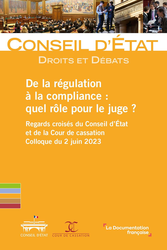
► Full Reference: M.-A. Frison-Roche, "Le rôle du juge dans le déploiement du droit de la régulation par le droit de la compliance" ("Synthesis: The role of the Judge in the deployment of Regulatory Law through Compliance Law"), Synthesis in Conseil d'État (French Council of State) and Cour de cassation (French Court of cassation), De la régulation à la compliance : quel rôle pour le juge ? Regards croisés du Conseil d'Etat et de la Cour de cassation - Colloque du 2 juin 2023, La Documentation française, "Droits et Débats" Serie, 2024, pp. 173-182
____
____
🚧read the bilingual Working Paper which is the basis of this article, with additional developments, technical references and hyperlinks
____
► Presentation of this concluding article: It is remarkable to note the unity of conception and practice between professionals who tend to work in administrative jurisdictions and professionals who tend to work in judicial jurisdictions: they all note, in similar terms, an essential movement: what Regulatory Law is, how it has been transformed into Compliance Law, and how in one and even more so in the other the Judge is at the centre of it.
Judges, as well as Regulators and European officials, explain this and use different examples to illustrate the far-reaching changes it brings to the Law and to the companies responsible for increasing the systemic effectiveness of the rules through the practice and dissemination of a Culture of Compliance.
The role of the judge participating in this Ex Ante transformation is renewed, whether he/she is a judge of Public Law or a judge of Private Law, in a greater unity of the legal system.
____
► English Summary of this article: The tug-of-war between 'Compliance' and 'conformity', which is exhausting us, obscures what is essential, i.e. the great novelty of a branch of law that assumes a humanist vision expressing the ambition to shape the future so that it is not catastrophic (preventing systems from collapsing), or even better (protecting human beings in these systems).
The article begins by describing the emergence of Compliance Law, as an extension of Regulatory Law and going beyond it. This new branch of law takes account of our new world, brings its benefits and seeks to counter these systemic dangers so that human beings could be their beneficiaries and are not crushed by them. This branch of Ex Ante Law is therefore political, often supported by public Authorities, such as Regulatory Authorities, but today it goes beyond sectors, as shown by its cutting edge, the Obligation of Vigilance.
The "Monumental Goals" in which Compliance Law is normatively anchored imply a teleological interpretation, leading to an "empowerment" of the crucial operators, not only States but also companies, responsible for the effectiveness of the many new Compliance Tools.
The article goes on to show that Judges are increasingly central to Compliance Law. Lawsuits are designed to make companies more accountable. In this transformation, the role of the judge is also to remain the guardian of the Rule of Law, both in the protection of the rights of the defence and in the protection of secrets. Efficiency is not what defines Compliance, which should not be reduced to a pure and simple method of efficiency, which would lead to being an instrument of dictatorship. This is why the principle of Proportionality is essential in the judge's review of the requirements arising from this so powerful branch of Law.
The courts are thus faced with a new type of dispute, of a systemic nature, in their own area, which must not be distorted: the Area of Justice.
____
📝read article (in French)
________
April 4, 2024
Thesaurus : Doctrine
► Référence complète : F. Ancel, "Quel rôle pour le juge aujourd’hui dans la compliance ? Quel office processuel du juge dans la compliance ?", in Conseil d'État et Cour de cassation, De la régulation à la compliance : quel rôle pour le juge ? Regards croisés du Conseil d'Etat et de la Cour de cassation - Colloque du 2 juin 2023, La Documentation française, coll. "Droits et Débats", 2024, pp. 101-119
____
► Résumé de l'article :
________
March 28, 2024
Publications

🌐suivre Marie-Anne Frison-Roche sur LinkedIn
🌐s'abonner à la Newsletter MAFR Regulation, Compliance, Law
____
► Référence complète : M.-A. Frison-Roche, L'émergence du Contentieux Systémique, document de travail, mars 2024.
____
🎤 Ce document de travail a été élaboré pour servir de base à la 1ière intervention, relative à "L'émergence du Contentieux Systémique", dans la conférence-débat sur Importance et spécificité du Contentieux Systémique Émergent , qui s'est tenue à la Cour d'appel de Paris le 29 mars 2024.
____
📝Il est aussi la base de l'article qui s'en suivra.
____
► Résumé du document de travail : Nous voyons émerger ce qu'il convient d'émerger un "Contentieux Systémique". Cette notion, proposée en 2021, vise l'hypothèse dans laquelle un système est "impliqué" dans une "cause" particulière soumise au juge. Il ne faut confondre présence d'un système et analyse systémique d'un phénomène. Le terme de "cause" doit être entendu au sens procédurale, tel que l'article 5 du Code civil l'utilise. Précisément, la prohibition portée par l'article 5 du Code civil ne s'applique pas parce qu'un système ainsi impliqué appelle des réponses et des solutions de fait et non pas nécessairement des solutions générales et abstraites : la solution de nature et de portée systémique que la présence d'un système dans une cause appelle peut être une solution de fait, même si elle irradie l'ensemble du système en cause. Mais précisément parce que la présence d'un système dans la cause entraîne souvent une question elle-même systémique, le juge s'il veut respecter l'article 4 du Code civil y répondre, non pas seulement a minima en n'éludant pas la question, par exemple celles des risques systémiques, mais encore pleinement en apporter des solutions systémiques, par exemple des remédiations pour préserver à l'avenir la solidité et la durabilité des systèmes impliqués dans le cas.
Ces systèmes peuvent être de différente nature : bancaire, financier, transport, sanitaire, énergétique, numérique, algorithmique ou climatique. Leur présence dans des cas portés à la connaissance des juges, dont la variété et les difficultés seront vus dans des contributions ultérieures, amènent à des questions de base relative à l'émergence du Contentieux Systémique : en premier lieu, comment peut-on définir le Contentieux Systémique ? En second lieu, qu'est-ce qu'il fait émerger cette catégorie de contentieux ? Des réponses apportées à ces deux questions découlent des conséquences pratiques essentielles.
Les solutions nouvelles doivent être conçues suivant que l'on admet que le système doit être considéré comme une "partie au litige", qui lui permettrait par une entité étant légitime à l'exprimer, d'alléguer des prétentions et de formuler des demandes contre un adversaire, ou comme une "partie à l'instance", catégorie beaucoup plus vaste, qui permettrait au juge d'entendre les intérêts des systèmes impliqués sans que des personnes ne puissent pour autant au nom d'un système formuler des prétentions à l'encontre ou au bénéfice d'une partie au litige.
____
🔓lire le document de travail ci-dessous⤵️
Feb. 15, 2024
Publications
🌐follow Marie-Anne Frison-Roche on LinkedIn
🌐subscribe to the Newsletter MAFR Regulation, Compliance, Law
____
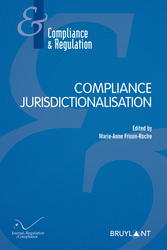
► Full Reference: M.-A. Frison-Roche, "Adjusting General Procedural Law to Compliance Law by the Nature of things", in M.-A. Frison-Roche (ed.), Compliance Jurisdictionalisation, Journal of Regulation & Compliance (JoRC) and Bruylant, "Compliance & Regulation" Serie, 2024, pp. 273-28.
____
📝read the article
____
🚧read the bilingual Working Paper which is the basis of this article, with additional developments, technical references and hyperlinks
____
📘read a general presentation of the book, Compliance Jurisdictionalisation, in which this article is published
____
The principal elements of this articles had been presented during the scientific manifestation held on September 23, 2021, at Dauphine University in Paris, coorganised by the Journal of Regulation & Compliance (JoRC) and the Institute Droit Dauphine.
In the book this article is placed in the chapter II about the General Procedural Law in the Compliance Law.
____
► Summary of the article (done by the Journal of regulation & Compliance - JoRC): General Procedural Law is an invention, essentially due to Professor Motulsky, going well beyond the gain that one always has in comparing types of procedures with each other. As he asserted, there is Natural Law in General Procedural Law, in that as soon as there is the Rule of Law Principle there cannot be, whatever the "procedure", even the "process", such and such way of doing things: for example, to decide, to seize the one who decides, to listen before deciding, to contest the one who has decided.
General Procedural Law therefore depends on the nature of things. However, Compliance Law organizes things in a new way. Therefore, both the simple and iron principles of General Procedural Law creep in where we do not expect them at first sight, because there is no judge, this character around whom ordinary procedures fit together. The principles of General Procedural Law are essential in companies. Even if the regulations do not breathe a word about it, it is up to the Judges, in particular the Supreme Courts, to recognize this nature of things because on this effect of nature that General Procedural Law is built: when compliance mechanisms oblige companies to strike, General Procedural law must oblige, even in the silence of the texts, to arm those who can be hit, even stand up against devices that would set aside too much these defenses that are easily considered contrary to efficiency (I).
But because it is a question of making room for this nature of the things of which the Rule of Law Principle entrusts the custody to the Judge and the Lawyer, the General Procedural Law must also adjust itself to what the extraordinary new branch of Law Compliance Law is. Indeed, Compliance Law is extraordinary in that it expresses the political pretention to act now so that the future will not be catastrophic, by detecting and preventing the realization of systemic risks, or even that it is better, by building effective equality or real concern for others. Because it is the Monumental Goals that defines this new branch of Law, a disputed systemic issue, possibly disputed by several parties before a judge, the procedural principles used by the court must be broadened considerably: they must then include civil society and the future (II).
General Procedural Law thus naturally acquires an even more place than in the classic branches of Law since on the one hand it imposes itself outside of trials, particularly in companies and on the other before the courts it involves people who had hardly any place to speak and thinks themselves, especially the systems entering the "causes" of Compliance now debated before the Judge.
________

Dec. 27, 2023
Thesaurus : Doctrine

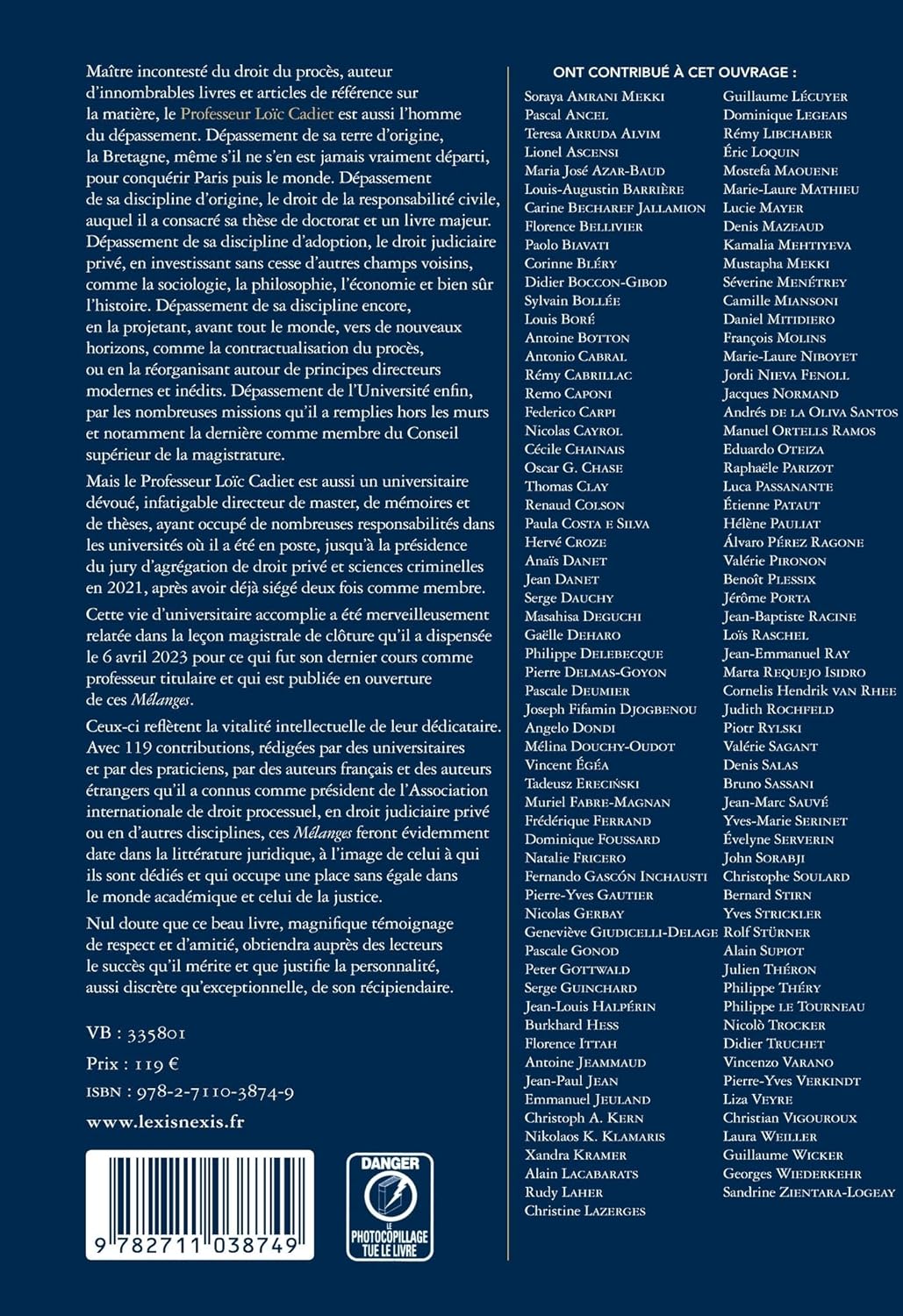
► Référence complète : Mélanges en l'honneur du Professeur Loïc Cadiet, LexisNexis, 2023, 600 p.
____
📗lire la 4ième de couverture de l'ouvrage
____
📗lire le sommaire de l'ouvrage
____
► Résumé de l'ouvrage (fait par l'éditeur) : "Maître incontesté du droit du procès, auteur d'innombrables livres et articles de référence sur la matière, le Professeur Loïc Cadiet est aussi l'homme du dépassement. Dépassement de sa terre d'origine, la Bretagne, même s'il ne s'en est jamais vraiment départi, pour conquérir Paris puis le monde. Dépassement de sa discipline d'origine, le droit de la responsabilité civile, auquel il a consacré sa thèse de doctorat et un livre majeur. Dépassement de sa discipline d'adoption, le droit judiciaire privé, en investissant sans cesse d'autres champs voisins, comme la sociologie, la philosophie, l'économie et bien sûr l'histoire. Dépassement de sa discipline encore, en la projetant, avant tout le monde, vers de nouveaux horizons, comme la contractualisation du procès, ou en la réorganisant autour de principes directeurs modernes et inédits . Dépassement de l'Université enfin, par les nombreuses missions qu'il a remplies hors les murs et notamment la dernière comme membre du Conseil supérieur de la magistrature.
Mais le Professeur Loïc Cadiet est aussi un universitaire dévoué, infatigable directeur de master, de mémoires et de thèses, ayant occupé de nombreuses responsabilités dans les universités où il a été en poste, jusqu'à la présidence du jury d'agrégation de droit privé et sciences criminelles en 2021, après avoir déjà siégé deux fois comme membre. Cette vie d'universitaire accomplie a été merveilleusement relatée dans la leçon magistrale de clôture qu'il a dispensée le 6 avril 2023 pour ce qui fut son dernier cours comme professeur titulaire et qui est publiée en ouverture de ces Mélanges.
Ceux-ci reflètent la vitalité intellectuelle de leur dédicataire. Avec 119 contributions, rédigées par des universitaires et par des praticiens, par des auteurs français et des auteurs étrangers qu'il a connus comme président de l'Association internationale de droit processuel, en droit judiciaire privé ou en d'autres disciplines, ces Mélanges feront évidemment date dans la littérature juridique, à l'image de celui à qui ils sont dédiés et qui occupe une place sans égale dans le monde académique et celui de la justice.
Nul doute que ce beau livre, magnifique témoignage de respect et d'amitié, obtiendra auprès des lecteurs le succès qu'il mérite et que justifie la personnalité, aussi discrète qu'exceptionnelle, de son récipiendaire.".
____
📝lire une présentation de l'article de Muriel Fabre-Magnan, "Critique de la convergence des responsabilités contractuelle et délictuelle. L'exemple du devoir de vigilance"
________
Nov. 30, 2023
Conferences
🌐follow Marie-Anne Frison-Roche on LinkedIn
🌐subscribe to the Newsletter MAFR Regulation, Compliance, Law
____
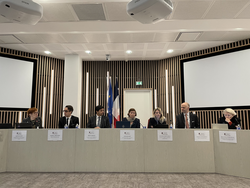
► Full Reference: M.-A. Frison-Roche, "Conclusion", in M. Boissavy, H. Dehghani-Azar, and M.-A. Frison-Roche (dir.), Journal of Regulation & Compliance (JoRC) and Conseil national des Barreaux (CNB), Compliance, vigilance et médiation (Compliance, Vigilance and Mediation), Amphitheatre of the Conseil national des Barreaux, November 30, 2023.
____
🧮see the full programme of this event
________