Cinema

Articles

Illustrated Law🎬Law & Cinema

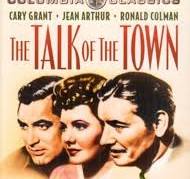
🎭𝐅𝐢𝐜𝐭𝐢𝐨𝐧🎬The talks in the Town: what can a law professor do about it?”

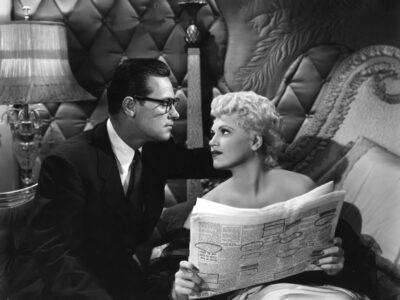
  ► Full reference : M.-A. Frison-Roche, "Fiction🎬The talks in the Town  : what can a law professor do about it?", article from the Newsletter Law & Art, December 2025. - 🎬Watch the trailer - ► Summary of this article : This 1942 film seems to have left little trace. However, the main character, an innocent man whom the villain manipulates into being designated as the culprit by the small town's population, leading him to behave like a guilty person, is played by Cary Grant. This film inspired lawyers even more. And even more so law professors, because it was a law professor, the dean of Harvard Law School, who saved the innocent man who had been caught in the trap. And even more so today, since it was by playing on rumours, by creating them from the outset, in what we would call disinformation, that the powerful villain intended to win and, in the process, become mayor of the town, after escaping bankruptcy by setting fire to his own factory, a crime he blames on the innocent man thrown to the wolves of public opinion as citizens gather in the square. It's almost as if we were there… - 🔓read the article below⤵️ - Follow Marie-Anne Frison-Roche on LinkedIn follow Marie-Anne Frison-Roche on Instagram Subscribe to the Newsletter MAFR Regulation, Compliance, Law Subscribe to the video newsletter MAFR Overhang Subscribe to the Newsletter MaFR Law & Art
Articles

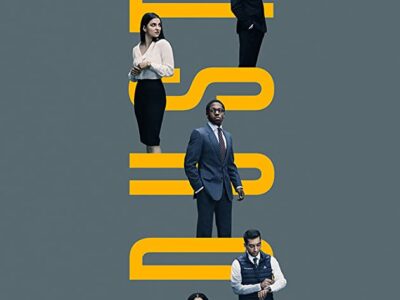
The horror series “Industry” is just a documentary; as was “The Wolf of Wall Street”; watch a series or read a thesis, it’s the same

Academics did a study on how people who work in investment banks kill themselves on the job. The death of a 21-year-old intern, having worked three days without sleeping, in the Goldman Sachs bank, the testimonies of young people explaining that they work non-stop, undoubtedly contributed to testimonies, relayed in the press, specialized or generalist, but also university studies. Indeed, two academics published a research no longer on the rules applicable within investment banks, which took measures to force their employees and their interns (since the victim was an intern) to rest on Sundays but on journeys based on data accessible by taxi companies. As a result, the reaction of the people was not to rest: it was to increase the daily working time, to leave even later after dark. Research shows that this phenomenon increases during the summer, that is to say precisely when the people who work are more trainees, that is to say those who want to "prove themselves": As the authors say: "Cette analyse, menée avec mon ex-collègue de doctorat de la Aalto University School of Business (Finlande), montre que, lorsque les banques ont mis en place des politiques de travail sans samedi, cela a incité les employés à travailler tard le soir en semaine pour compenser. Ces résultats sont plus marqués pendant les semaines de stages d’été, lorsque les banques d’investissement emploient un grand nombre d’étudiants désireux de faire leurs preuves en travaillant dur." (“This analysis, conducted with my ex-doctoral colleague from Aalto University School of Business (Finland), shows that when banks implemented work policies without Saturday, it prompted employees to work late nights on weekdays to compensate. These results are most marked during the summer internship weeks, when investment banks employ large numbers of students eager to prove themselves by working hard. ") -   Let's go back to the Industry series. An expert has shown all the points on which it does not correspond to "reality", on such and such a point. The cinema is reality — not even in the reconstitution of such or such a point, it reproduces it by throwing on the screen what is the idea which moves in the facts. This series begins with the death of a trader, who died of work. It tells exactly the life, how to qualify it …, let's say "the crazy life" of those who work there. It is hardly bearable to watch. In any case, it is exactly the image of what these two academics are saying.    

Articles

Regulation, Compliance & Cinema: learning about Internet Regulation with the series “Criminals”​

Full reference: Frison-Roche, M.-A., Regulation, Compliance & Cinema: learning about Internet Regulation with the series "Criminals"​, Newsletter MAFR – Law, Compliance, Regulation, 21st of September 2020 Read by freely subscribing other news of the Newsletter MAFR – Law, Compliance, Regulation   Summary of the news:  Season 2 Episode 3 of the British version of the series "Criminals" features the character of Danielle. Danielle is a mother which has decided to hunt down pedophiles on social networks in order to trap them and show to the world their acts. Danielle insists on the efficiency of her action with regard to the police and justice that she finds unproductive. In the episode, Danielle is accused of defamation by the police. While policemen try to explain to Danielle the importance of using a regular procedure and to respect the Rule of Law aiming to prove its accusations, she makes efficiency her only principle. According to her, her methods get results (on the contrary of those used by the police which respect procedures) and those she accuses to be pedophiles do not deserve defense rights.  We can learn three lessons from Danielle's story:  If Compliance Law is just a process of application of mechanical rules, then Rule of Law is not salient face to the principle of efficiency. But, if Compliance Law is defined by its "monumental goals" and that the respect of Rule of Law is erected in "monumental goal", then efficiency and Rule of Law become compatible and congruent.  The digital space must be disciplined by crucial digital firms supervised by public authorities, like in France or Germany for hate speeches and disinformation.  Compliance Law, and Law in general, must be pedagogue towards individuals as Danielle which do not understand why their behaviors are reproachable. 

Movies

HITCHCOCK, Alfred

The Wrong Man

The Wrong Man, a film by Alfred Hitchcock, 1956. The film was also released in French under the title Le faux coupable. Read the analysis of the film by the Cinémathèque française (written in French, 2014), on whether this film, close to a documentary, is a « true » Hitchcock. This is all the more remarkable since, in 2019, Arnaud Desplechin considered it the director’s masterpiece.

Articles

Apprendre le Droit américain avec Miss Sloane