
29 mai 2026
Publications

article dans un ouvrage collectif juridique
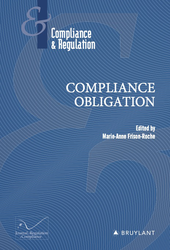
📝General Procedural Law, prototype of the Compliance Obligation, in 🕴️M.-A. Frison-Roche (dir.), 📘Compliance Obligation
to read this presentation totally in English ↗️ click on the British flag
🌐suivre Marie-Anne Frison-Roche sur LinkedIn
🌐s'abonner à la Newsletter MAFR Regulation, Compliance, Law
🌐s'abonner à la Newsletter en vidéo MAFR Surplomb
🌐s'abonner à la Newsletter MaFR Droit & Art
____
► Référence complète : M.-A. Frison-Roche, "General Procedural Law, prototype of the Compliance Obligation", in M.-A. Frison-Roche (dir.), Compliance Obligation, Journal of Regulation & Compliance (JoRC) et Bruylant, coll. "Compliance & Regulation", 2026, à paraître
____
📝lire l'article (en anglais)
____
____
📘consulter une présentation générale de l'ouvrage, Compliance Obligation, dans lequel cet article est publié
____
► Résumé de l'article: At first glance, General Procedural Law seems to be the area the least concerned by the Compliance Obligation, because if the person is obliged by it, mainly large companies, it is precisely, thanks to this Ex Ante, in order to never to have to deal with proceedings, these path that leads to the Judge, that Ex Post figure that in return for the weight of the compliance obligation they have been promised they will never see: any prospect of proceedings would be seeming to signify the very failure of the Compliance Obligation (I).
But not only are the legal rules attached to the Procedure necessary because the Judge is involved, and increasingly so, in compliance mechanisms, but they are also rules of General Procedural Law and not a juxtaposition of civil procedure, criminal procedure, administrative procedure, etc., because the Compliance Obligation itself is not confined either to civil procedure or to criminal procedure, to administrative procedure, etc., which in practice gives primacy to what brings them all together: General Procedural Law (II).
In addition to what might be called the "negative" presence of General Procedural Law, there is also a positive reason, because General Procedural Law is the prototype for "Systemic Compliance Litigation", and in particular for the most advanced aspect of this, namely the duty of vigilance (III). In particular, it governs the actions that can be brought before the Courts (IV), and the principles around which proceedings are conducted, with an increased opposition between the adversarial principle, which marries the Compliance Obligation, since both reflect the principle of Information, and the rights of the defence, which do not necessarily serve them, a clash that will pose a procedural difficulty in principle (V).
Finally, and this "prototype" status is even more justified, because Compliance Law has given companies jurisdiction over the way in which they implement their legal Compliance Obligations, it is by respecting and relying on the principles of General Procedural Law that this must be done, in particular through not only sanctions but also internal investigations (VI).
________
les commentaires sont désactivés pour cette fiche