Civil law

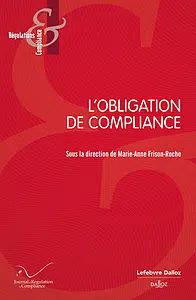
Couverture – L’Obligation de Compliance

Articles in a JoRC book

GAUVAIN, Raphaël🕴️ & BALIAN, Blanche🕴️

📝Opposition et convergence des systèmes juridiques américains et européens dans les règles et cultures de compliance (Opposition and Convergence of American and European Legal Systems in Compliance Rules and Cultures), in 🕴️M.-A. Frison-Roche (dir.), 📕L’Obligation de Compliance

► Full Reference: R. Gauvain & B. Balian, “Opposition et convergence des systèmes juridiques américains et européens dans les règles et cultures de compliance” (“Opposition and Convergence of American and European Legal Systems in Compliance Rules and Cultures”), in M.-A. Frison-Roche (ed.), L’Obligation de Compliance, Journal of Regulation & Compliance (JoRC) and Lefebvre-Dalloz, “Régulations & Compliance” Serie, 2025, pp. 401-417. - read the general presentation of the book, L’Obligation de Compliance, in which this article is published - ► This article is written in French. English summary of this contribution (done by the Journal of Regulation & Compliance – JoRC): The authors approach Compliance Law through its tools, mainly compliance programmes through which companies comply with regulations and investigations conducted by companies at the request of public authorities to identify risks and new modes of defence consisting of entering into agreements with prosecuting authorities. The article highlights the American inspiration behind this movement, whereby the State, primarily for the sake of efficiency, transfers the responsibility for pursuing “Monumental Goals” to businesses. Based on this, the article first shows how American mechanisms have been imported into Europe, particularly France, with the Convention judiciaire d’intérêt public, taking on many of the characteristics of the DPA, even if some specific features remain, for example in the alert mechanisms. Secondly, the convergence between the two systems is shown, because through the compliance obligations that form the core of these compliance tools, it is always Western values that are expressed, values that are common to American Law and European Law and European countries. It has enabled this importation, and we can now see that these values are more strongly upheld by Europe, particularly through the Vigilance duty and the DSA. - 🦉This article is available in full text to those registered for Professor Marie-Anne Frison-Roche’s courses -

Conferences

🎤participation à la table ronde “Le droit à l’enfant : réalité ou faux concept ?”, in 🧮Regards croisés sur les nouvelles filiations

► Full Reference: M.-A. Frison-Roche, participation to the round table "Le droit à l'enfant : réalité ou faux concept ?" ("The right to a child: reality or false concept?"), in Regards croisés sur les nouvelles filiations, Cour d'appel de Paris (Paris Court of Appeal), September 12, 2024 - 🧮see the full programme of this event - ► Summary of the conference:  -  

Books

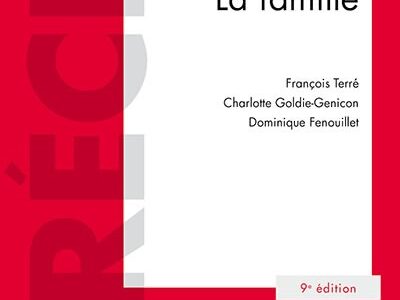
Droit civil. La famille

Working papers

🚧Globalization from the point of view of Law

► Full Reference: M.-A. Frison-Roche, Globalization from the point of view of Law, working paper, May 2017. - 🎤 This working paper initially served as a basis for a synthesis report made in French in the colloquium organized by the Association Henri Capitant in the International German Days on the subject of “Le Droit et la Mondialisation” (Law and Globalization). 📝 It then served as the basis for the article published in the book La Mondialisation. 📝 it serves as a second basis for the article (written in English, with a Spanish Summary) to be published in the Brezilian journal Rarb – Revista de Arbitragem e Mediação (Revue d`Arbitrage et Médiation). It uses the Bilingual Dictionary of the Law of Regulation and Compliance. - ► Summary of the Working: Globalization is a confusing phenomenon for the jurist. The first thing to do is to take its measure. Once it has been taken, it is essential that we allow ourselves to think of something about it, even if we have to think about it. For example, on whether the phenomenon is new or not, which allows a second assessment of what is taking place. If, in so far as the law can and must “pretend” to defend every being, a universal claim destined to face the global field of forces, the following question – but secondary – is formulated: quid facere? Nothing ? Next to nothing ? Or regulate? Or can we still claim that the Law fulfills its primary duty, which is to protect the weak, including the forces of globalization? - read the Working Paper below⤵️

Books

Analyse économique du droit