April 21, 2021
Publications

► Full Reference: M.-A. Frison-Roche, "Résoudre la contradiction entre "sanction" et "incitation" sous le feu du Droit de la Compliance" ("Resolving the contradiction between "sanction" and "incentive" under the fire of Compliance Law"), in M.-A. Frison-Roche (ed.), Les outils de la Compliance, coll. "Régulations & Compliance", Journal of Regulation & Compliance (JoRC) and Dalloz, 2021, p. 89-98
____
📝read the article (in French)
____
🚧read the bilingual Working Paper which is the basis of this article, with more developments, technical references and hyperlinks
____
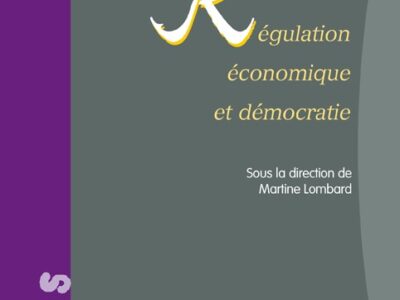
📕read a general presentation of the book, Les outils de la Compliance, in which this article is published
____
► Summary of the article (done by the Journal of Regulation and Compliance): Compliance and Incentives appear at first glance to be totally opposite. For two major reasons. Firstly, because sanctions have a central place in Compliance Law and that the incentives suppose an absence of constraint on the operators. Secondly, because the incentives are linked to self-regulation and that Compliance Law assumes a strong presence of public authorities. Thus, one should choose: either Compliance or Incentives! Either the effectiveness of one or the effectiveness of the others; either the techniques of one, or the techniques of others; either the philosophy of one or the philosophy of the other. Resign oneself to the waste that such a necessary choice would imply. But to put the terms in this way amounts to thinking poorly about the situations and reducing the fields of the solutions they call for. If we take a rich definition of Compliance Law, we can on the contrary articulate Compliance and Incentives. From this perspective, sanctions can no longer become what blocks the use of incentives but, on the contrary, what constitutes them. Even more, the coupling between the Incentives and the requirements of Compliance Law must be strongly encouraged, as soon as the public authorities supervise in Ex Ante all the initiatives taken by the "crucial operators".
This article deals with the first issue. Indeed, the so-called incentive theory targets mechanisms which do not directly resort to constraint. They would therefore have little place in Compliance Law. But it seems saturated with sanction procedures. We can even say that it seems to put them at the center, the public authorities presenting the number of sanctions as a sign of success, while the companies seem obsessed with their prospects, the two concerns ending in such a strange convergence that are the Convention Judiciaire d'Intérêt Public (non-prosecution agreement).
The honest observer cannot help but be immediately uneasy. Indeed, it can only raise the definition of the sanction as a "constraint" triggered Ex Post, at the very heart of a Compliance Law which is presented as a set of Ex Ante mechanisms. Based on this contradiction in terms, should we give up the association and think that it would be wrong against the spirit to think of the sanction as an incentive?
It is undoubtedly in this connection that one perceives most clearly the clash of two cultures, which do not communicate, while technically they apply to the same situations. Indeed, because Compliance was designed by Finance, everything is a tool for it. Therefore, the tendency to think of the sanction only as an incentive is very strong in Compliance Law, manifests itself continuously and will not stop (I). But whatever the reasons for conceiving it this way, the principles of the rule of law cannot disappear and if we do not want them to be erased, then they must be articulated (II). This is an essential game (II).
This is why we can literally say that Compliance has set Criminal Law on fire by its conception, logical but closed in on itself, of sanctions as simple incentives. In order for Law to remain, however, we must hold a very firm definition of Compliance Law centered on its Monumental Goal, which is the protection of the person.
________
April 21, 2021
Publications

► Full Reference: M.-A. Frison-Roche, "La formation : contenu et contenant de la Compliance" ("Training: content and container of Compliance"), in M.-A. Frison-Roche (ed.), Les outils de la Compliance, coll. "Régulations & Compliance", Journal of Regulation & Compliance (JoRC) and Dalloz, 2021, pp.. 227-244.
____
📝read the article (in French)
____
🚧read the bilingual Working Paper which is the basis of this article, with additional developments, technical references and hyperlinks
____
📕read a general presentation of the book, Les outils de la Compliance, in which this article is published
____
► Summary of the article (done by the Journal of Regulation and Compliance): Firstly, as Training is a specific Compliance tool, it is supervised by Regulators. It becomes mandatory when it is contained in Compliance programs or sanction decisions. Since effectiveness and efficiency are legal requirements, what is the margin of companies to design them and how to measure the result?
Secondly, as long as each Compliance tool includes, more and more, an educational dimension, we can take each of them to identify this perspective. So even condemnations and prescriptions are so many lessons, lessons given, lessons to be followed. The question is then to know who, in this so pedagogical Compliance Law, are the "teachers"?
________
April 15, 2021
Thesaurus : Doctrine
Référence complète : J.-S. Bergé, Les situations en mouvement et le droit, Dalloz, coll. « Méthodes du droit », 2021, 327 p.
____
Lire le compte rendu par Jacques Commaille , à la revue Droit et Société.
March 31, 2021
Organization of scientific events
This scientific event is placed under the scientific responsibility of Marie-Anne Frison-Roche and Jean-Baptiste Racine. It is organized by the Journal of Regulation & Compliance (JoRC) and by the Centre de recherche sur la Justice et le Règlement des Conflits (CRJ) of the Panthéon-Assas (Paris II) University, with the active support of the International Chamber of Commerce ICC.
This event is the third colloquium of the 2021 colloquia cycle around the general theme of Compliance Juridictionnalization.

The different interventions will be then transformed into contributions in the books La juridictionnalisation de la Compliance and Compliance Juridictionnalization which will be published in the Regulation & Compliance serie, jointly published by the JoRC and Dalloz for the book in French and by JoRC and Bruylant for the book in English.
This colloquium will take place the 31st of March 2021.
The manifestation will be live broadcasted on Zoom.
To register: https://u-paris2-fr.zoom.us/webinar/register/WN_sPSB4aUUQTWDWDnNcYt3sA
Presentation of the theme:
The arbitrator is the ordinary judge of international trade. It was natural that he or she encountered Compliance: by definition Compliance Law takes hold of the whole world and follows the paths of international trade while it can only be deployed with the help of institutions which, by nature are spreading around the world and need authorities like the Courts.
The conference is based on the already perceptible connection points between Compliance and Arbitration to better identify what is emerging for tomorrow: contradiction or convergence between the two; weakening or consolidation. We are already seeing the impact that Compliance can have on the arbitrator's treatment of corruption or the consideration of money laundering. More generally, where do we stand with the arbitrator's knowledge of the many technical issues related to compliance? Beyond these, will the courts and arbitrators be able to achieve the goals, themselves new, sometimes monumental, pursued by Compliance Law?
Through this joint exploration of these avenues, the fate of compliance clauses inserted in contracts, the relevance in the matter of private codes of conduct, etc. will be examined.
Tomorrow, as of today, is the arbitrator a full and complete judge of Compliance Law?
How, with what specificities and what controls?
Notably will speak:
Read a detailed presentation of the colloquium below:
March 31, 2021
Conferences

Référence complète: Frison-Roche, M.-A.,Compliance et Arbitrage : un adossement, rapport de synthèse in Frison-Roche, M.-A. & Racine, J.-B. (dir.) Compliance et Arbitrage, Colloque coorganisé par le Journal of Regulation & Compliance (JoRC) et le Centre de recherches sur la Justice et le Règlement des Conflits (CRJ) de l'Université Panthéon-Assas (Paris II), avec le soutien de la Cour Internationale d'Arbitrage, Paris, 31 mars 2021.
____
🗓️ Lire le programme de ce colloque
____
✏️Le rapport de synthèse a été réalisé au fur et à mesure que se déroulait le colloque : se reporter aux notes prises durant le colloque.
____
Voir le rapport de synthèse en vidéo
Voir l'intégralité du colloque en vidéo.
___
📅 Ce colloque s'insère dans le cycle de colloques 2021 organisé par le Journal of Regulation & Compliance (JoRC) et ses partenaires autour de la Juridictionnalisation de la Compliance.
📕 Les interventions ont servi de première base à la réalisation d'un titre dans l'ouvrage dirigé par Marie-Anne Frison-Roche, dont la version française, La juridictionnalisation de la Compliance, est co-édité par le Journal of Regulation & Compliance (JoRC) et Dalloz.
📘 Elles ont été de la même façon la première base pour la version anglaise de l'ouvrage, Compliance Juridictionalisation, co-édité par le Journal of Regulation & Compliance (JoRC) et Bruylant.
_________
March 31, 2021
Conferences

► Référence complète : Frison-Roche, M.A., Ex Ante Compliance, in Gaia-X, Towards Automated Compliance in the Data Economy, en ligne, 31 mars 2021
____
► Présentation générale de l'intervention : Cette courte intervention vise à expliquer l'apport essentiel du Droit de la Compliance pour la construction et la durabilité d'une structure comme GAIA-X.
____
March 22, 2021
Conferences

General reference : Frison-Roche, M.-A., The Future of legal uncertainty notion with regards with the treatment of extraordinary situations: economic crisis (L'avenir de la notion d'insécurité juridique au regard du traitement des situations extraordinaires: crise économique), in "Insécurité juridique : émergence d'une notion ?", Cour de cassation, 22nd of March 2021.
Read the general program of the colloquium (in French)
See the first part of the colloquium (in French)
See the second part of the colloquium in which Marie-Anne Frison-Roche speaks (in French)
Updated: March 22, 2021 (Initial publication: Jan. 25, 2021)
Teachings : Sectorial Regulatory Law - 2021

Cet enseignement se déroule au semestre de printemps 2021, à la suite du cours semestriel qui a porté sur le "Droit commun de la Régulation".
Comme pour celui-ci, il est entièrement assuré par Marie-Anne Frison-Roche, professeur d'Université, titulaire à Sciences po.
Comme de nombreux étudiants qui suivent ce présent cours-séminaire n'ont pas suivi ce cours, il est important de se reporter au matériau du cours de Droit commun de la Régulation. Dans la mesure où ce présent séminaire est le prolongement de ce cours qui, en raison des nombreux retours des principes de droit commun dans diverses matières juridiques, s'est souvent éloigné du Droit de la Régulation, cette consultation peut demeurer utile même pour les étudiants ayant suivi ce premier cours.
La crise sanitaire actuelle rendant plus difficile l'apprentissage, il apparaît nécessaire ne pas débuter directement le cours-séminaire sur les problématiques spécifiquement sectorielles : les trois premières séances seront donc consacrées à des bases de Régulation dès l'instant qu'elles se retrouvent dans chacun des secteurs et que si certains sont classiques (comme l'existence et le fonctionnement des "Autorités de Régulation" ou des "Autorités de Supervision", certaines problématiques sont naissantes et déterminantes pour l'avenir : comme le renouvellement de la pertinence de la référence au secteur, ou l'internalisation de la Régulation dans les Entreprises, ou les buts communs ou spécifiques de la Régulation ce qui conduit à reclasser les secteurs.
Cela opéré et ayant donné lieu à discussion, le Cours de Droit sectoriel de la Régulation vise à montrer la persistance de la spécificité de tel et tel secteurs. Il ne peut les examiner tous mais il s'agit de mesurer à quel point les spécificités sectorielles imprègnent les règles. Ainsi chaque secteur est à la fois gouverné par des règles communes à tous (ce "droit commun" qui donna lieu à un cours complet précédent et dont la perspective aura été reprise dans la perspective sectorielle) et par ce qui lui est propre, sans doute avant tout ce qui est afférent à l'objet technique lui-même (le rail, le téléphone, la monnaie, etc.). Le Cours fait place également à la "régulation du numérique", bien que l'espace digital ne puisse plus guère être analysé comme un "secteur", ni en conséquence sa régulation comme une "régulation sectorielle". Cette question sera reprise dans le semestre 3 d'automne dans le cours-séminaire de Droit de la Compliance .
En raison de l'hétérogénéité des étudiants inscrits, il est concevable que le choix des secteurs étudiés plutôt que d'être arrêté par avance puissent être arrêtés directement avec les étudiants lors de la première séance.
Ce livret détaille la façon dont les étudiants, qui suivent cet enseignement situé dans l'École d'affaires publiques de Science po, sont évalués afin de valider cet enseignement. Il précise la charge du travail qui est demandé.
Les thèmes des leçons qui composent successivement le cours sont énumérés. Comme il s'agit d'une perspective thématique les bibliographies sont insérées dans les leçons et non plus dans une bibliographie générale, laquelle allait de soi pour la présentation du "Droit commun de la Régulation" et peut continuer un intérêt dans une perspective sectorielle..
A partir de ce livret, chaque document propre à chaque leçon est accessible.
Voir ci-dessous plus de détails sur chacun de ces points, ainsi que la liste des leçons et les annales des sujets d'examen.